Chapter 1. What Is It About Games?
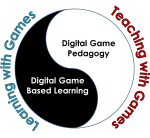
Entire volumes have been written that are devoted to exploring what games are and yet we still have no definitive statement on the meaning of the word ‘game’. You will find almost as many definitions of ‘game’ as there are authors writing about it. There are some common elements though, and this chapter will use those to define what we mean by ‘game’. In order to make effective use of games in the classroom we need to be able to choose appropriate games to use in our lessons. Evaluation is a key element of the development of instruction, and when using games it is important to be able to assess its potential suitability before it goes into the classroom. We can do that using predictive evaluation, which is introduced here. Next we trace a brief history of games in society as well as in education, as games have been part of human society since ancient times, and there is evidence to suggest that one of the roles of games has always been learning. We've come a long way in our development of games, and digital games are more than a simple evolution of non-digital games though, and the differences are outlined. The chapter concludes with a few more definitions so that we can all start on the same page.
Chapter Goals
- Define the term ‘game’ as it will be used in the book.
- Explain how evaluation of games helps us choose better games for the classroom.
- Explain the four main time-frames for educational evaluation.
- Trace a brief history of the cultural significance of games and their role in learning general and in formal education in particular.
- Describe the between traditional and digital games.
- Define the initial vocabulary that will be used throughout the book, such. as: learning, education, serious game, DGBL, and COTS.
Outline
- What is a Game?
- define games for my purposes as part of a larger group of digital applications
- Why We Need to Analyse Games
- Why Games?
- Games in Society
- Games in Education
- Talking About Games
- Going Digital
- Games Now